


By Pakores On 13-05-2026 at 9:17 am
Khyber Pakhtunkhwa’s New Minerals and Gemstone Policy 2025: Opportunities, Challenges, and the Future of Mining
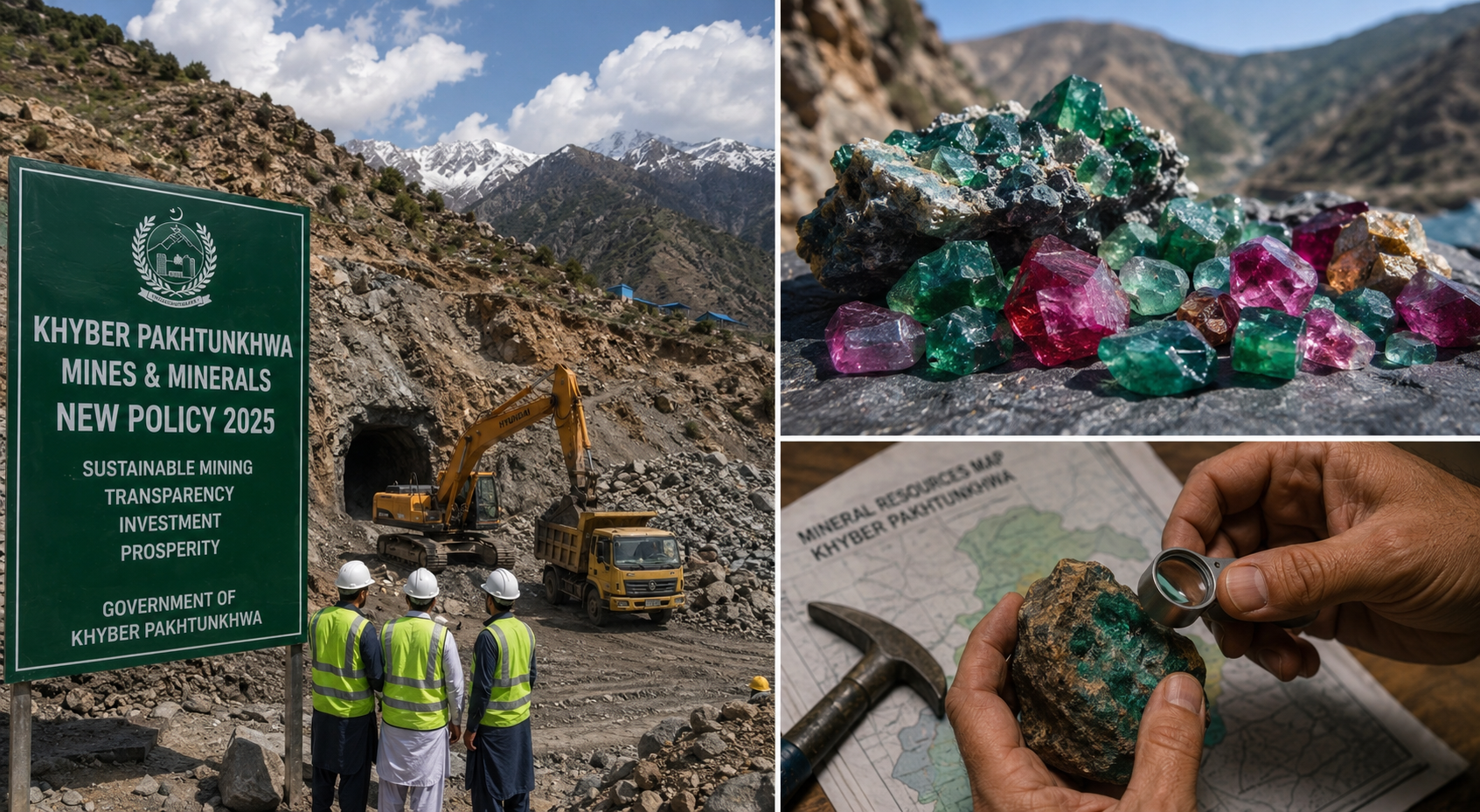
Khyber Pakhtunkhwa (KP) is one of Pakistan’s richest provinces in terms of natural resources. From the emerald mines of Swat to the marble reserves of Mohmand and the precious stones of Chitral and Kohistan, the province possesses enormous mineral wealth. In 2025, the KP government introduced a major reform initiative called the Khyber Pakhtunkhwa Mines and Minerals Bill, 2025, aimed at modernizing the mining and gemstone sector.
The proposed bill has become one of the most debated policy initiatives in the province because it directly affects mining licenses, gemstones, local communities, investors, and provincial control over natural resources.
Background of the Mining Sector in KP
Mining has historically been an important economic activity in KP. The province is famous for:
- Emeralds from Swat,
- Ruby deposits in Hunza and Chitral regions,
- Topaz and aquamarine from Katlang and Gilgit regions,
- Marble and granite from Mohmand and Buner,
- Limestone, chromite, gypsum, and copper deposits across several districts.
The mining industry supports thousands of workers, mine owners, transporters, exporters, and gemstone traders. However, despite rich resources, the sector has long suffered from:
- illegal mining,
- smuggling,
- poor regulation,
- outdated licensing systems,
- environmental degradation,
- and lack of modern technology.
To address these problems, the provincial government introduced reforms through the new Mines and Minerals Bill 2025.
What is the KP Mines and Minerals Bill 2025?
The Khyber Pakhtunkhwa Mines and Minerals Bill, 2025 was introduced in the Provincial Assembly on April 4, 2025. It seeks to amend and modernize the older KP Mines and Minerals Act 2017.
The government claims the new law is designed to:
- attract local and foreign investment,
- improve transparency,
- increase provincial revenue,
- stop illegal mining,
- digitize mining operations,
- and modernize the gemstone industry.
Key Features of the New Policy
1. Digital Licensing and Cadastre System
One of the most important reforms is the introduction of a digital mining licensing system.
Previously, many mining leases and permits were managed manually, creating opportunities for corruption, delays, and disputes. Under the proposed framework:
- applications will become digital,
- mining records will be computerized,
- lease information will be transparent,
- and investors will be able to track applications online.
This digital cadastre system is expected to reduce manipulation and improve governance.
2. Creation of Mineral Investment Facilitation Authority (MIFA)
The bill proposes establishing a new institution called the Mineral Investment Facilitation Authority (MIFA).
The authority would:
- facilitate investment,
- coordinate mining projects,
- review royalties and fees,
- support large-scale mining,
-
and help develop mineral infrastructure.
The government believes this institution can attract international companies and modern mining technology into KP.
3. Strict Action Against Illegal Mining
Illegal mining has been a major issue in KP for decades. Smuggling of gemstones and unauthorized excavation have caused major revenue losses.
The new bill proposes:
- stricter penalties,
- confiscation of machinery,
- monitoring systems,
- and establishment of a specialized mines and minerals enforcement force.
The government argues that stronger enforcement will increase legal exports and provincial revenue.
4. Joint Ventures for Large Mining Projects
The policy introduces special provisions for large-scale mining investments.
Projects involving investment above a certain threshold may require joint ventures with government-owned entities.
Supporters argue this will:
- protect provincial interests,
- ensure revenue sharing,
- and increase state oversight.
Critics, however, believe it may discourage small investors and favor large corporations.
5. Focus on Foreign Investment
The KP government wants to transform the mining sector into a globally competitive industry.
The policy aims to attract foreign investment in:
- gold,
- copper,
- rare earth minerals,
- gemstones,
- marble,
- and industrial minerals.
Modern machinery and scientific mining methods are expected to improve productivity and exports.
6. Geological Mapping and Mineral Database
Another major initiative is the development of a scientific mineral database.
The government plans:
- geological surveys,
- mineral mapping,
- reserve estimation,
- and digital resource documentation.
This could help investors identify commercially viable mining areas more accurately.
Importance of Gemstones in KP
KP is internationally known for high-quality gemstones. Swat emeralds, in particular, are considered among the finest emeralds in the world.
Major gemstone-producing regions include:
- Swat,
- Chitral,
- Kohistan,
- Mohmand,
- Bajaur,
- Shangla,
- and merged tribal districts.
Important gemstones found in KP include:
- emerald,
- ruby,
- topaz,
- aquamarine,
- garnet,
- peridot,
- quartz,
- tourmaline,
- and fluorite.
The government believes the new policy can significantly increase gemstone exports if cutting, polishing, and certification facilities are developed locally.
Economic Benefits Expected from the Policy
The government expects several economic advantages from the reforms.
Increased Revenue
By reducing illegal mining and improving royalty collection, provincial revenue may increase substantially.
Job Creation
Large mining projects can generate employment for: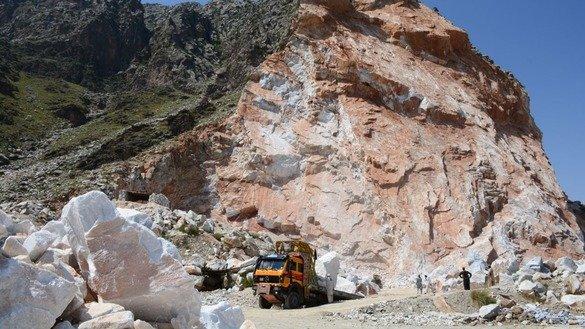
- engineers,
- geologists,
- laborers,
- gemstone cutters,
- exporters,
- and transport sectors.
Export Growth
Pakistan currently exports raw minerals with limited value addition. Improved processing industries may increase export earnings.
Infrastructure Development
Mining investment may improve:
- roads,
- electricity,
- communication,
- and industrial zones in remote districts.
Controversies and Criticism
Despite the potential benefits, the bill has generated strong opposition from political parties, mine owners, and civil society groups.
Concerns About Provincial Autonomy
Critics argue that the proposed advisory role of federal mining institutions may weaken KP’s constitutional authority over minerals after the 18th Amendment.
Many political leaders claim that minerals are a provincial subject and should remain fully under provincial control.
Concerns of Local Mine Owners
Small-scale miners and local mining associations fear:
- high financial requirements,
- expensive bank guarantees,
- and strict regulations may push them out of the industry.
They argue that the policy may primarily benefit large corporations rather than local communities.
Community Rights and Profit Sharing
Some analysts argue the bill does not clearly define:
- profit-sharing mechanisms,
- local ownership,
- community welfare funds,
- or employment quotas for local populations.
Communities in mining regions often demand a larger share in mineral wealth.
Environmental Concerns
Mining activities can seriously damage the environment if not properly regulated.
Environmental risks include:
- deforestation,
- water pollution,
- land degradation,
- and unsafe mining practices.
Experts argue that strong environmental regulations and rehabilitation programs are essential for sustainable mining development.
Future of the Mining and Gemstone Sector in KP
The future of KP’s mineral sector depends on how effectively the government balances:
- investment,
- local rights,
- environmental protection,
- and transparency.
If implemented properly, the reforms could transform KP into:
- a regional gemstone hub,
- a major exporter of processed minerals,
- and a center for mining investment in South Asia.
However, without public trust and stakeholder consultation, the reforms may continue to face resistance.
Conclusion
The Khyber Pakhtunkhwa Mines and Minerals Bill 2025 represents one of the biggest attempts to reform the province’s mining and gemstone industry in recent years. The policy aims to modernize licensing, attract investment, stop illegal mining, and increase provincial revenue through better regulation and digitization.
At the same time, the bill has raised important debates about provincial autonomy, local ownership, environmental protection, and the rights of mining communities. The final success of the policy will depend on transparency, fair implementation, stakeholder consultation, and sustainable management of KP’s valuable mineral resources.
KP possesses enormous untapped mineral wealth. With proper governance, technology, and local participation, the province’s gemstone and mining sector could become a major driver of economic growth and employment in Pakistan.
Related posts


1-3-2026
Types of Gemstones Found in Pakistan